
Weight loss

Weight loss that holds

Losing it is the straightforward part. This is clinician-led treatment built around keeping it off — your dose reviewed and adjusted as you go, not handed over and forgotten.

From £99.00 / month

Based on Wegovy Pill. Your price depends on the treatment and dose a clinician prescribes — from £99 to £149 a month.

  • Four routes — two weekly injections, two daily tablets
  • Reviewed by a registered clinician within 1 working day
  • Up to 20.9% average weight loss in clinical trials1

Takes 4 minutes · If a clinician doesn’t prescribe, you’re refunded in full

A woman sitting on her kitchen counter, laughing, holding a glass of water

Medication options

More than one route.
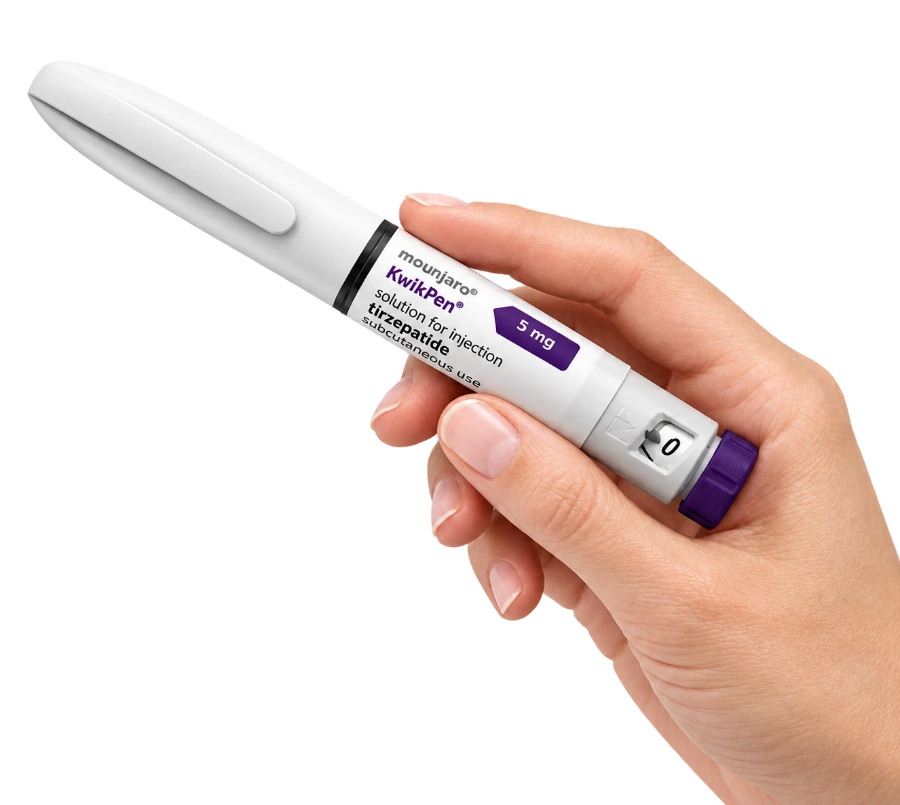
Mounjaro

Mounjarotirzepatide

From £149.00 / month

Once weekly injection

A newer weekly treatment a clinician may consider depending on your health and history.

  • 20.9% average weight loss over 72 weeks1
  • Acts on two gut-hormone pathways, not one
  • Pre-loaded pen — no needle to attach
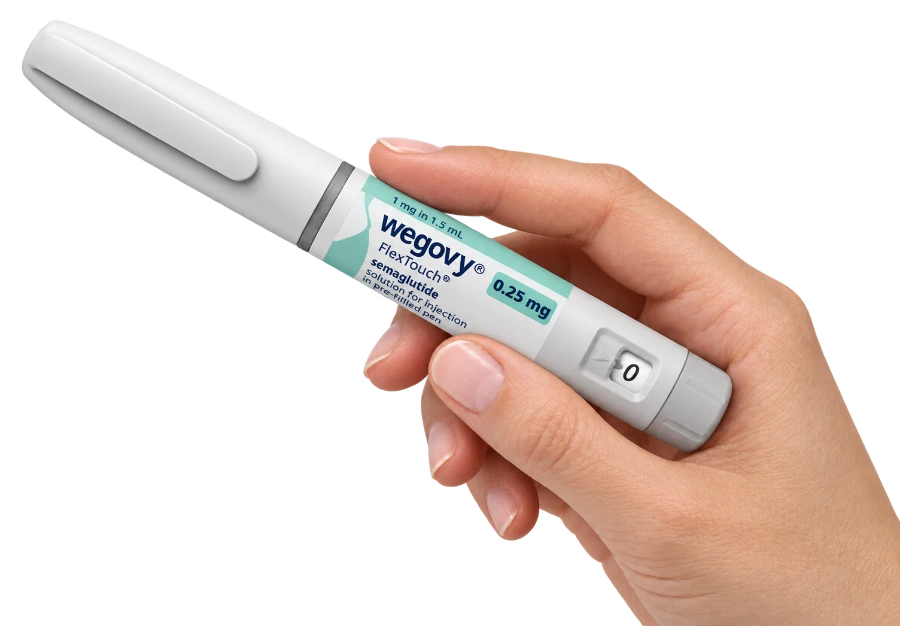
Wegovy

Wegovysemaglutide

From £119.00 / month

Once weekly injection

One of the most established weekly options for medical weight management.

  • 14.9% average weight loss over 68 weeks2
  • The most widely studied of the weekly injections
  • Pre-loaded pen — no needle to attach
Wegovy Pill

Wegovy Pilloral semaglutide

From £99.00 / month

Once daily tablet

The newest route we offer, and an oral one, taken daily rather than weekly.

  • 13.6% average weight loss over 64 weeks3
  • The same medicine as the injection, taken by mouth
  • One tablet a day, no needles
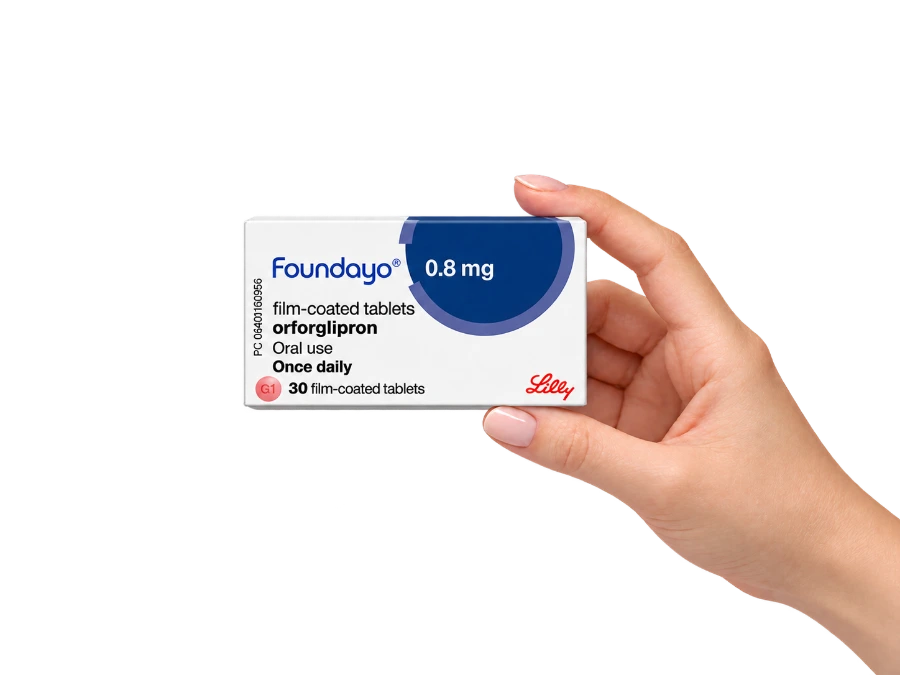
Foundayo

Foundayoorforglipron

Price confirmed at assessment

Once daily tablet

Another option a clinician may consider as part of your weight-management plan, depending on your health and history.

  • 11.1% average weight loss over 72 weeks4
  • A non-peptide tablet — taken any time of day
  • No food or water timing rules

There isn’t a single “best” treatment, the right one depends on you. Here’s what a clinician may consider, though the final choice, and whether treatment is suitable at all, is always theirs to make with you.

BMI check

Where does your BMI land?

0
Enter your details

Your result and what it means will appear here.

We ask because health-risk thresholds differ across ethnic groups.

BMI is a guide, not a diagnosis, and it doesn't fit everyone (for example during pregnancy, or for very muscular people). A registered clinician makes the final decision about whether any treatment is appropriate for you.

The whole programme

Your weight-loss journey

1
A clinician reviewing an online assessment
Before you start

Your assessment

  • A four-minute online assessment
  • Reviewed by a clinician, not a form
  • Your wider health, not just the scale
2
Starting treatment at home
Week 1–2

Getting started

  • A low starting dose, by design
  • Support if you feel off while adjusting
  • Free delivery, in plain packaging
3
Reviewing progress during treatment
Month 1–6

The weight-loss phase

  • Your dose reviewed and adjusted
  • Portions start to feel smaller
  • Refills arrive automatically
4
Ongoing support from the care team
Ongoing

Ongoing support

  • Any wind-down is gradual, never abrupt
  • Cancel anytime, month to month
  • A care team a message away
The people behind your care

Clinicians, not chatbots.

Dr. Feroz Zafar, Medical Director at Manova

Medical Director

GMC 7266874
Naeem Teni, Clinical Lead at Manova

Clinical Lead

GPhC 2215591
Saiyma Zafar, Head of Clinical Operations at Manova

Head of Clinical Operations

GPhC 2052120

The bit that isn't marketing.

Placeholder layout - replace with verified patient reviews before launch

Placeholder text. A short review sits here, about two lines, so you can see how the card looks at its smallest.

–Reviewer nameWeight loss · month

Placeholder text. This card carries a medium-length review, roughly four lines of body copy, which shows how the card grows and where the name settles underneath it.

–Reviewer nameWeight loss · month

Placeholder text. A longer review runs to about six lines, which is roughly the most this layout carries comfortably before the row starts to look unbalanced against the two cards beside it.

–Reviewer nameWeight loss · month
FAQs

The questions people actually ask.

Nobody can tell you your number in advance, and be wary of anyone who tries. What the clinical trials found, at the highest dose studied, alongside diet and activity support:

  • Mounjaro (tirzepatide 15 mg, 72 weeks) — 20.9% average weight loss
  • Wegovy (semaglutide 2.4 mg, 68 weeks) — 14.9%
  • Wegovy Pill (oral semaglutide 25 mg, 64 weeks) — 13.6%
  • Foundayo (orforglipron 36 mg, 72 weeks) — 11.1%

Those are averages across everyone who started, including people who stopped early, which is the honest way to read them and lower than the figures usually quoted. Some people lose considerably more. Some lose very little. Your starting weight, the dose you tolerate and what else changes alongside it all matter.

Most of the weight comes back, and it is better to know that now than in a year.

When semaglutide was withdrawn in the STEP 1 trial extension, participants regained around two-thirds of what they had lost within twelve months — finishing 5.6% below where they started, having been 17.3% down at their lowest.

That is not a failure of willpower. These medicines work while they are in your system; when they leave, appetite returns to roughly where it was. It is why we treat this as long-term management rather than a course you finish, and why the plan puts weight on the parts that outlast the medication.

No — two of the four options are tablets.

Mounjaro and Wegovy are once-weekly injections you give yourself with a pre-loaded pen. There is no needle to attach and no dose to draw up; it goes into the stomach, thigh or upper arm. Wegovy Pill and Foundayo are taken daily by mouth instead.

Which suits you is worth raising in your assessment. A dislike of needles is a perfectly good reason to prefer a tablet, and nobody here will make you feel odd about it.

For weight loss, on average, yes — and unusually for this question it has been tested directly rather than inferred by comparing separate trials. In SURMOUNT-5, a head-to-head study, tirzepatide produced 20.2% average weight loss at 72 weeks against 13.7% for semaglutide.

“On average” is doing real work in that sentence. Averages describe groups, not people, and the better-performing medicine is not automatically the better choice for you — how well you tolerate it, your other conditions and medicines, cost, and how you feel about a weekly injection all count. That is a conversation with your clinician, not a league table.

Treatment is usually considered from a BMI of 30, or from 27 if you also have a weight-related condition such as high blood pressure or type 2 diabetes. There is a BMI checker further up this page.

BMI is a starting filter, not the decision. It is a crude measure — it cannot tell muscle from fat, and it reads differently across ethnic groups — so a clinician looks at your whole picture rather than one number.

Mostly your gut, and mostly early. Nausea is the common one, along with constipation, diarrhoea, vomiting and reflux. They tend to appear when you start and each time your dose increases, and to settle as your body adjusts. Smaller portions, stopping when you are full rather than when the plate is, and going easy on rich food help more than people expect.

Less commonly these medicines can cause gallbladder problems or inflammation of the pancreas. Severe, persistent stomach pain, particularly if it goes through to your back with vomiting, needs urgent medical attention rather than a wait-and-see. Your clinician will go through the full list against your history before anything is prescribed.

Every case is read by a registered clinician. They can and do say no when treatment isn’t appropriate, that’s the point of having a clinician rather than a checkout button.
Then you’re not charged. The clinician might suggest a safer alternative, ask for more information, or refer you back to your GP. We’d rather lose a sale than push the wrong treatment.

References

  1. SURMOUNT-1 phase 3 randomised controlled trial (Jastreboff et al., New England Journal of Medicine, 2022 — DOI: 10.1056/NEJMoa2206038). Figure shown is the treatment-regimen estimand for tirzepatide 15 mg at 72 weeks, alongside a lifestyle intervention. Results are from a clinical trial population; individual results will vary.
  2. STEP 1 phase 3 randomised controlled trial (Wilding et al., New England Journal of Medicine, 2021 — DOI: 10.1056/NEJMoa2032183). Figure shown is the treatment-regimen estimand for semaglutide 2.4 mg at 68 weeks, alongside a lifestyle intervention. Results are from a clinical trial population; individual results will vary.
  3. OASIS 4 phase 3 randomised controlled trial (New England Journal of Medicine, 2025). Figure shown is the treatment-regimen estimand for oral semaglutide 25 mg at 64 weeks, alongside a lifestyle intervention. Results are from a clinical trial population; individual results will vary.
  4. ATTAIN-1 phase 3 randomised controlled trial (New England Journal of Medicine, 2025). Figure shown is the treatment-regimen estimand for orforglipron 36 mg at 72 weeks, alongside a lifestyle intervention. Results are from a clinical trial population; individual results will vary.