

Key takeaways
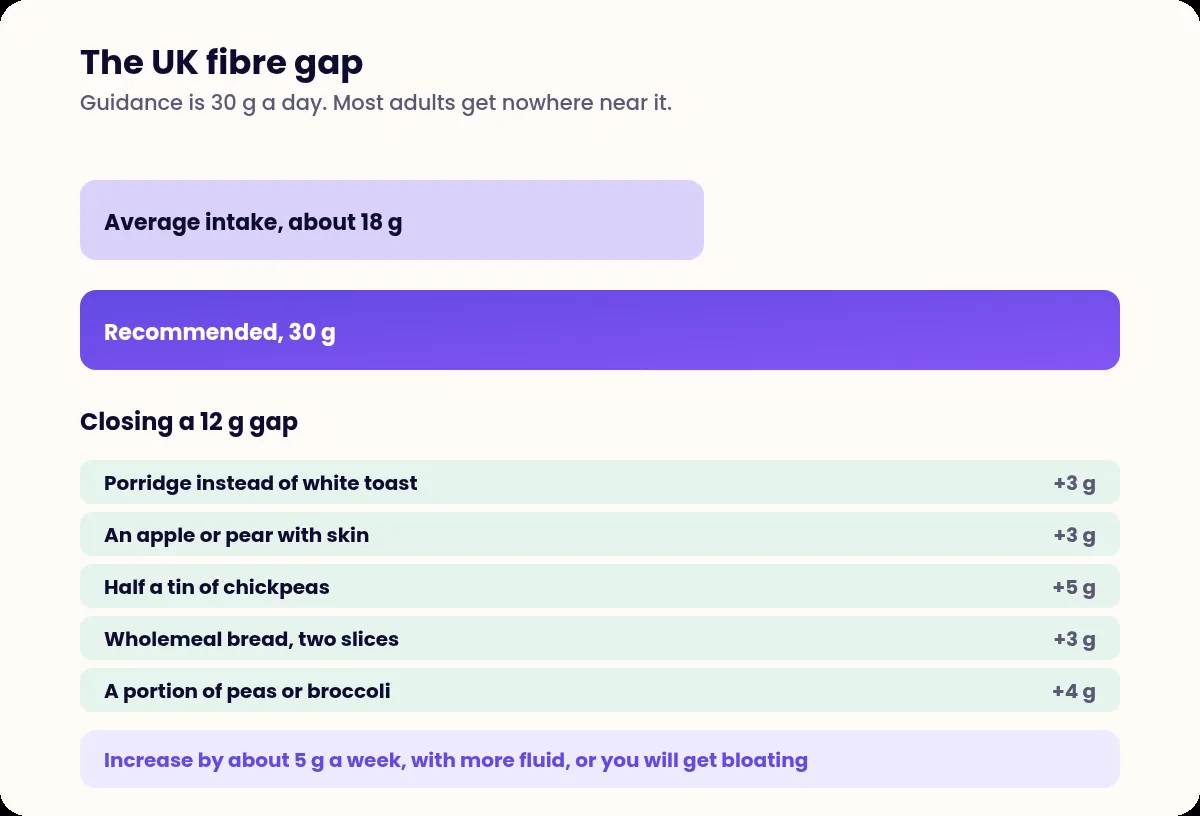
- UK guidance is 30 g of fibre a day for adults; average intake is around 18–20 g.
- Fibre slows gastric emptying and glucose absorption, which affects both fullness and blood sugar.
- Soluble and insoluble fibre do different jobs, and a varied diet supplies both.
- Increase intake gradually and with fluid, or you will get bloating and wind.
Protein gets the attention. Fibre does the quiet work.
UK guidance is 30 g of fibre a day for adults [1]. Average intake sits somewhere around 18 to 20 g [2]. That gap is one of the largest and most consistent shortfalls in the British diet, and closing it changes appetite, blood sugar and bowel health at once.
What fibre actually does
Fibre is the part of plant food that human enzymes cannot break down. That sounds like a definition of something useless. It is closer to a definition of something that works by not being digested.
It slows things down. Soluble fibre forms a viscous gel in the stomach and small intestine. Food leaves the stomach more slowly, and glucose enters the blood more gradually. Both matter for hunger and for blood sugar.
It adds volume without calories. High-fibre foods take up more room for the same energy, which is a large part of why they are more filling.
It feeds your gut bacteria. Fermentable fibre is metabolised by colonic bacteria into short-chain fatty acids, which appear to influence appetite signalling as well as gut health.
It keeps things moving. Insoluble fibre adds bulk and speeds transit.
The evidence
A large series of systematic reviews and meta-analyses in The Lancet pooled data across 185 observational studies and 58 trials. Higher fibre intake was associated with lower body weight, and with substantially lower rates of coronary heart disease, stroke, type 2 diabetes and colorectal cancer. The dose-response relationship kept improving up to around 25 to 29 g a day, with signals that more may be better still [3].
For weight specifically, the mechanism is not mysterious: people eating more fibre tend to eat fewer calories, without setting out to.
Two types, both needed
Soluble — oats, barley, beans, lentils, peas, apples, pears, citrus, psyllium. Forms a gel. Slows digestion, helps lower LDL cholesterol.
Insoluble — wholemeal bread, brown rice, wheat bran, nuts, seeds, the skins of fruit and vegetables. Adds bulk, speeds transit.
You do not need to track them separately. A varied plant-based intake supplies both.
How to get from 18 g to 30 g
The gap is about 12 g. Here is roughly what that looks like in practice.
| Change | Fibre added |
|---|---|
| Porridge (40 g oats) instead of white toast | ~3 g |
| A pear or apple with skin | ~3 g |
| Half a tin of chickpeas into a stew or salad | ~5 g |
| Wholemeal instead of white bread (2 slices) | ~3 g |
| A handful of almonds | ~3 g |
| Leaving the skin on potatoes | ~2 g |
| A portion of frozen peas or broccoli | ~4 g |
Three or four of those and you are there. None of them require a special product.
Do it gradually
This is the part people get wrong. Going from 18 g to 35 g in one day reliably produces bloating, wind and discomfort, and most people conclude that fibre does not agree with them.
Increase by about 5 g a week, and increase fluid alongside it. Fibre works by holding water; without enough of it, more fibre can make constipation worse rather than better.
A note if you are on weight-loss medication
GLP-1 based medicines slow gastric emptying, and constipation is a common side effect. Fibre helps, but the same caution applies — increase gradually, drink plenty, and mention persistent constipation to your prescriber rather than escalating fibre indefinitely.
When to speak to a clinician
Get medical advice if you have:
- a persistent change in bowel habit lasting three weeks or more
- blood in your stool, or bleeding from the bottom
- unexplained weight loss alongside bowel symptoms
- ongoing abdominal pain or bloating that does not settle
- inflammatory bowel disease or a stricture, where high-fibre advice may not apply
Do not assume new bowel symptoms are a fibre problem. They are worth checking properly.
Frequently asked questions
How much fibre should I eat a day in the UK?
Government guidance is 30 g a day for adults. Average intake in the UK is around 18 to 20 g, so most people have a meaningful gap to close.
Does fibre help you lose weight?
It helps indirectly but reliably. High-fibre foods are usually more filling for their calories, slow stomach emptying, and blunt the blood-glucose rise after meals. People eating more fibre tend to eat fewer calories without consciously restricting.
What's the difference between soluble and insoluble fibre?
Soluble fibre dissolves in water to form a gel, slowing digestion and helping lower cholesterol; it is found in oats, beans, apples and barley. Insoluble fibre adds bulk and speeds transit; it is found in wholegrains, nuts and the skins of fruit and vegetables. You need both.
Can I just take a fibre supplement?
Supplements can help, particularly for constipation, but they do not replace fibre-rich foods, which also carry protein, vitamins, minerals and polyphenols. Food first, supplements as a top-up if needed.
References
- Scientific Advisory Committee on Nutrition. Carbohydrates and Health. 2015. www.gov.uk/government/publications/sacn-carbohydrates-and-health-repor
- Public Health England. National Diet and Nutrition Survey. www.gov.uk/government/collections/national-diet-and-nutrition-survey
- Reynolds A, Mann J, Cummings J, Winter N, Mete E, Te Morenga L. Carbohydrate quality and human health: a series of systematic reviews and meta-analyses. The Lancet. 2019;393(10170):434-445. doi.org/10.1016/S0140-6736(18)31809-9
- NHS. How to get more fibre into your diet. www.nhs.uk/live-well/eat-well/digestive-health/how-to-get-more-fibre-i
Medical reviewer
Naeem Teni
Clinical Lead at Manova. Registered pharmacist and independent prescriber, GPhC 2215591. Reviews Manova’s clinical content for accuracy and safety.
Written by
Manova Editorial Team
Researched and written to our editorial policy, using NICE, NHS, MHRA and peer-reviewed sources.
This article is for general information and isn’t a substitute for advice from your own clinician. If you feel unwell, contact your GP or NHS 111. In an emergency, call 999.