
Key takeaways
- An erection depends on arteries widening and filling with blood, so anything that damages blood vessels affects it.
- Randomised trials of lifestyle-led weight loss in men with obesity have shown improvement in erectile function scores.
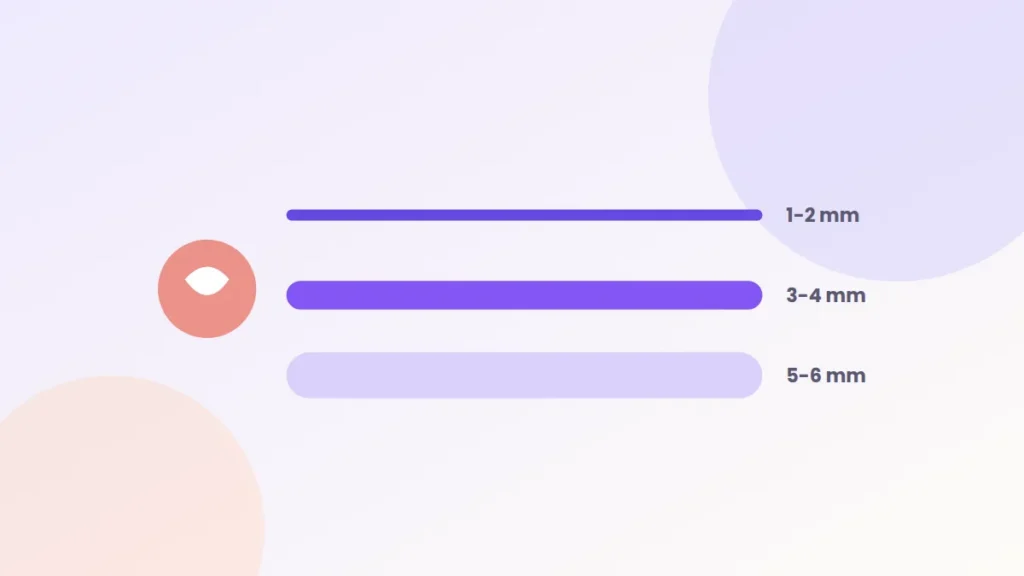
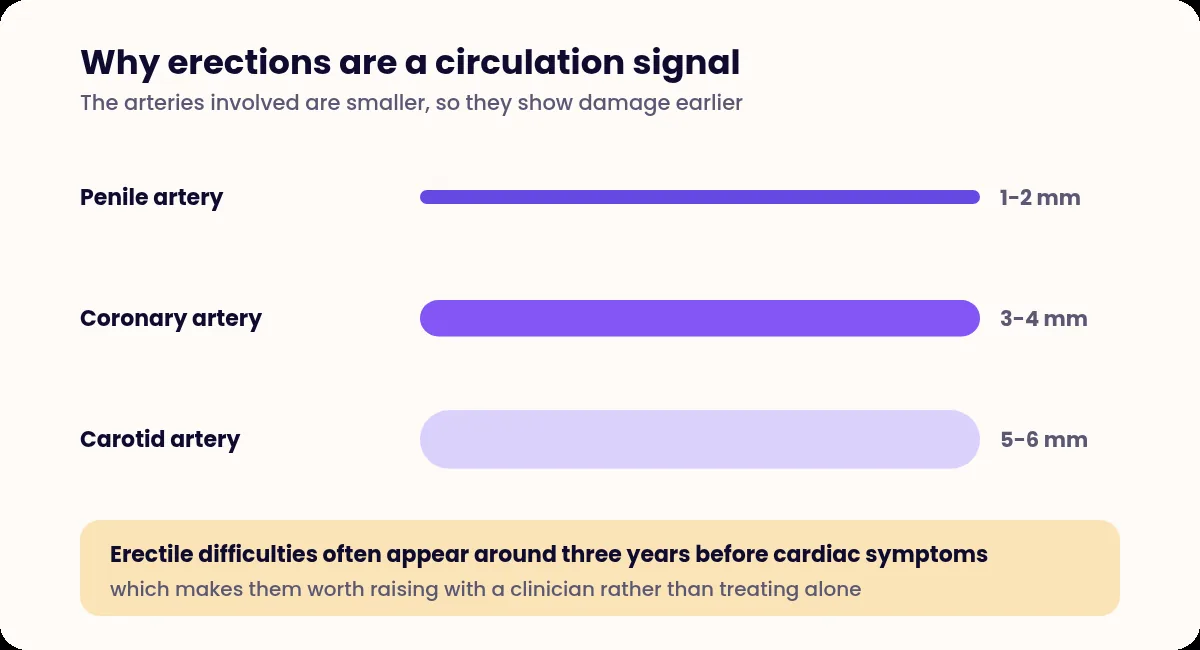
- The arteries supplying the penis are narrower than the coronary arteries, which is why erection problems can appear before heart symptoms.
- New or worsening erection problems are worth a GP appointment, not only for the symptom itself but for what it may be signalling.
Most men would rather read about almost anything else, which is exactly why it is worth being straightforward about it.
An erection is a circulation event. Nerves signal the smooth muscle in the arteries of the penis to relax, those arteries widen, blood flows in faster than it drains out, and pressure does the rest. Anything that damages the lining of blood vessels interferes with that sequence.
Why weight matters here
Excess weight — particularly around the middle — drives the same processes that damage arteries everywhere: raised blood pressure, unfavourable cholesterol, insulin resistance and low-grade inflammation. The endothelium, the single-cell lining that tells arteries when to relax, works less well.
The NHS lists high blood pressure, high cholesterol, diabetes and hormonal problems among the physical causes of erectile dysfunction, and its self-care advice starts with losing weight if you are overweight, exercising daily, drinking less than 14 units a week and stopping smoking [1].
What the trials found
This has been tested properly rather than assumed.
A randomised controlled trial published in JAMA in 2004 studied men with obesity and erectile dysfunction. The intervention group received intensive support for diet and physical activity; the control group received general information. After two years the intervention group had lost significantly more weight and had improved erectile function scores, with about a third of them no longer meeting the criteria for erectile dysfunction [3].
The Look AHEAD trial, in men with type 2 diabetes, found that intensive lifestyle intervention was associated with better erectile function than usual care [4]. The SHED-IT trial, a weight-loss programme designed for men, reported improvement in erectile function alongside weight loss [5].
The consistent thread is that the improvement travels with the weight loss and the activity, not with any single food or supplement.
The early warning nobody wants
This is the part worth taking seriously even if the symptom itself does not bother you much.
The British Heart Foundation puts it directly: erectile problems can be one of the first warning signs of atherosclerosis, because the arteries supplying the penis are narrower than those supplying the heart and therefore show the effects of narrowing earlier [2].
Put plainly: the same disease process that causes a heart attack can announce itself years earlier in a way that is easy to ignore or to treat privately with a tablet.
That is why new or worsening erectile difficulties deserve a GP appointment. Not primarily for the symptom — for the blood pressure check, the cholesterol test, the HbA1c, and the conversation about risk that should follow.
What to do
Lose weight if you are carrying excess, especially around the waist. Our guide to the waist-to-height check takes thirty seconds and tells you where you stand.
Move daily. Aerobic activity improves endothelial function directly — arguably the most specific intervention on this list.
Stop smoking. Nothing damages small arteries faster.
Drink less. Alcohol affects both the vascular and the hormonal side, and 14 units a week is the UK guideline for everyone.
Sleep properly, and get snoring checked. Sleep apnoea is common in men carrying extra weight and is independently associated with erectile problems.
Treat the conditions you already know about. Blood pressure and diabetes control matter here as much as anywhere.
About the tablets
The well-known ED medicines are prescription-only, and for good reason: they interact dangerously with nitrates used for angina, and they need a proper assessment.
They also treat a symptom. If the symptom is the first visible sign of vascular disease, treating it alone means turning off a warning light. Used alongside proper assessment and the changes above, they have a legitimate place. Bought anonymously online instead of a check-up, they do not.
When to speak to a clinician
See your GP if erection problems are new, persistent or worsening — particularly if you also have any cardiovascular risk factors, or if you have noticed reduced energy, low mood or loss of libido alongside. If you have chest pain or breathlessness on exertion, that needs attention urgently rather than at your convenience.
Frequently asked questions
Does losing weight help erectile dysfunction?
Randomised trials of lifestyle intervention in men with obesity have found improvements in erectile function scores alongside weight loss. The mechanism is vascular: better blood vessel function means better filling.
How much weight do you need to lose?
The trials showing benefit involved meaningful weight loss — in the region of 10% of body weight — combined with increased physical activity. Smaller changes may help, but the evidence is strongest where the weight loss was substantial and sustained.
Is erectile dysfunction a sign of heart problems?
It can be. The British Heart Foundation notes that erectile problems can be one of the first warning signs of narrowed arteries, because the arteries supplying the penis are smaller than those supplying the heart and show the effect earlier.
Is it testosterone or circulation?
Usually circulation, though the two often travel together in men carrying excess weight. That is one reason a proper assessment matters rather than self-treating.
Should I just buy tablets online?
Erectile dysfunction medicines are prescription-only and are not suitable for everyone, particularly anyone taking nitrates for heart problems. More importantly, treating the symptom without assessing the cause misses what the symptom may be telling you.
References
- NHS. Erectile dysfunction (impotence). www.nhs.uk/conditions/erection-problems-erectile-dysfunction/
- British Heart Foundation. Can heart disease cause erectile dysfunction? www.bhf.org.uk/informationsupport/heart-matters-magazine/medical/erect
- Esposito K, Giugliano F, Di Palo C, et al. Effect of lifestyle changes on erectile dysfunction in obese men: a randomized controlled trial. JAMA. 2004;291(24):2978-2984. pubmed.ncbi.nlm.nih.gov/15213209/
- Wing RR, Rosen RC, Fava JL, et al. Effects of weight loss intervention on erectile function in older men with type 2 diabetes in the Look AHEAD trial. Journal of Sexual Medicine. 2010;7(1 Pt 1):156-165. pubmed.ncbi.nlm.nih.gov/19694925/
- Collins CE, Jensen ME, Young MD, et al. Improvement in erectile function following weight loss in obese men: the SHED-IT randomized controlled trial. Clinical Obesity. 2013;3(6):206-209. pubmed.ncbi.nlm.nih.gov/24459689/
- NHS. Cardiovascular disease. www.nhs.uk/conditions/cardiovascular-disease/
Medical reviewer
Naeem Teni
Clinical Lead at Manova. Registered pharmacist and independent prescriber, GPhC 2215591. Reviews Manova’s clinical content for accuracy and safety.
Written by
Manova Editorial Team
Researched and written to our editorial policy, using NICE, NHS, MHRA and peer-reviewed sources.
This article is for general information and isn’t a substitute for advice from your own clinician. If you feel unwell, contact your GP or NHS 111. In an emergency, call 999.